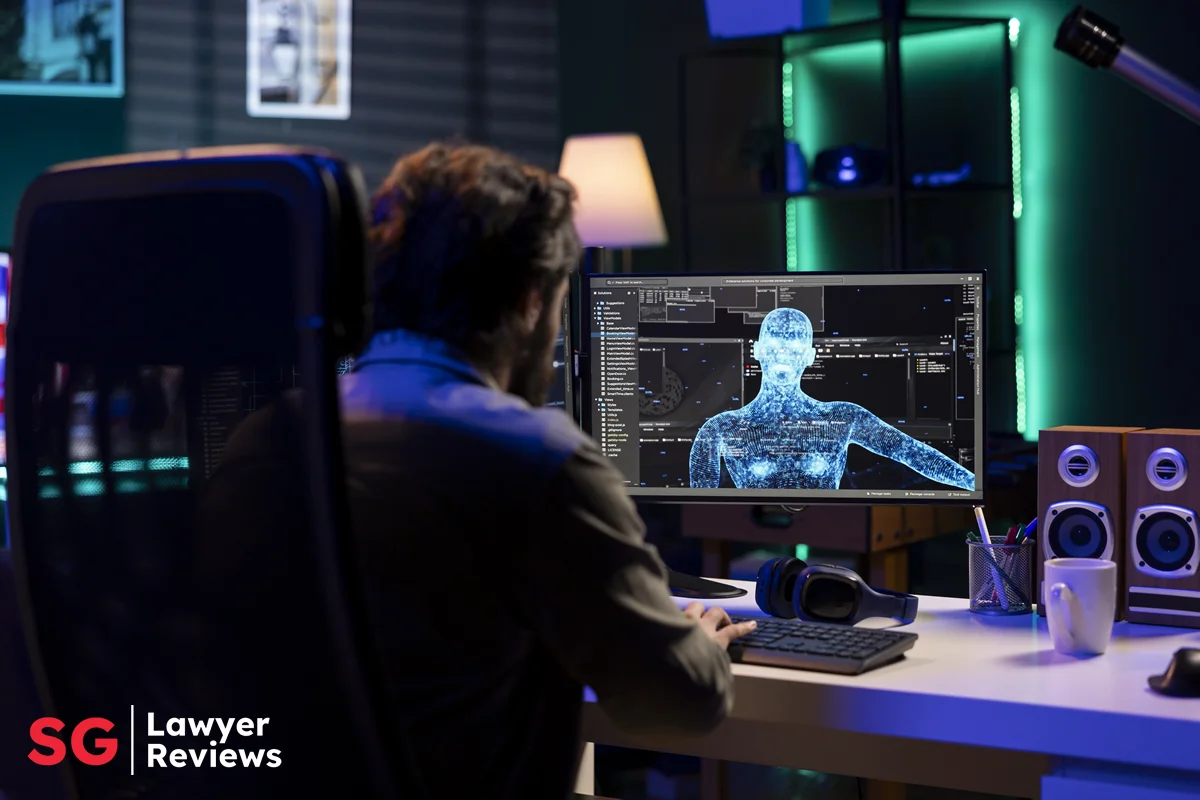
Artificial intelligence has made it possible to create realistic looking images of people doing and saying things that never happened, and this includes sexual images that a person never consented to and that never actually took place. Singapore’s Parliament moved to address this directly through the Criminal Law (Miscellaneous Amendments) Act 2025, passed on 4 November 2025, which introduced new offences and tougher penalties targeting AI-generated sexual images and other forms of harmful online sexual content.
This law arrived at the same time as the widely reported introduction of caning for scammers, but it addresses a completely different problem, one that has grown alongside the rapid spread of accessible AI image generation tools.
Why Parliament Stepped In
Before this law, Singapore already had offences covering obscene material and image based abuse, largely built around content that was photographed or filmed. AI-generated content created a grey area, since the image might not depict anything that actually happened to the person, yet it can still cause the same reputational harm, distress, and violation as a real photo or video shared without consent.
Lawmakers recognised that victims of this kind of abuse suffer real consequences regardless of whether the image was captured with a camera or generated by software. A fabricated sexual image circulated among someone’s classmates, colleagues, or family can damage relationships, careers, and mental wellbeing just as much as a genuine leaked photo, sometimes more, because the victim has no way to prove definitively that it is fake to everyone who sees it.
What the Law Now Covers
The amendments make it an offence to produce or share AI-generated sexual images, closing the gap that previously existed around content that was synthetic rather than real. This sits within a broader package of changes addressing online sexual offences under the same Act, which also increased penalties for people who circulate obscene material to ten or more people, and introduced caning as a punishment for administrators of group chats or platforms used to distribute such material.
Under the changes, someone convicted of circulating obscene material to a wide audience can face up to two years in jail, rising to four years if the material involves minors. The government has been clear that these increases apply on top of, not instead of, existing offences under laws such as the Films Act, the Penal Code, and the Protection from Harassment Act, which already address various forms of image based abuse and harassment.
Why This Matters in the Age of AI
The speed at which AI image generation has become accessible to ordinary people, not just specialists, is what makes this law particularly significant. A person no longer needs any technical skill to create a convincing but entirely fake sexual image of someone else, which means the pool of potential offenders has expanded dramatically compared to when this kind of harm required real photography or video editing expertise.
Singapore’s approach treats the harm to the victim as the central issue, rather than focusing on how technically sophisticated the fake image is or whether it would fool an expert. This mirrors a broader global shift in how lawmakers are thinking about AI generated harms, where the emphasis is increasingly on the impact of the content and the lack of consent, rather than on the method used to produce it.
How This Connects to Other Online Safety Laws
Singapore’s criminal law response operates alongside the Online Safety (Relief and Accountability) Act 2025. Under the Online Safety Commission’s initial reporting framework, victims of intimate image abuse can seek help with harmful online content without waiting for a criminal prosecution to conclude. Our guide to the Online Safety Commission explains how this relief process works.
Together, these laws form a two track system. The criminal law changes covered here focus on punishing the people who create and share this content, including through fines, jail time, and in serious cases caning for those running the platforms or groups where the material spreads. The online safety framework, by contrast, focuses on giving victims faster, more practical routes to have harmful content taken down and to seek some form of redress, which does not depend on waiting for a criminal case to conclude.
The Practical Challenge of Enforcement
Even with a clear law in place, catching and prosecuting people who create AI-generated sexual images is genuinely difficult. Content can be produced on a personal device without any online trace until it is shared, and once it is shared, it can spread across multiple platforms and group chats faster than any single platform operator can respond. Some tools used to generate this kind of content are also based overseas, outside Singapore’s direct jurisdiction, which limits what local enforcement can do about the tool itself even while still being able to act against a person in Singapore who uses it to target someone.
This is part of why Singapore has chosen to build a two track response rather than relying on criminal law alone. A criminal investigation can take time, and by the time a prosecution is complete, the harm to the victim from having the image circulate may already be extensive. The Online Safety Commission’s role in ordering fast takedowns is meant to address that gap, even while criminal proceedings against the person responsible continue separately.
What Victims Can Do
Anyone who discovers that an AI-generated sexual image of themselves is circulating has more than one option available. A police report can be made to trigger a criminal investigation under the new offences. Separately, once the Online Safety Commission’s relevant provisions are in force, victims can also lodge a report aimed specifically at getting the content removed and restricting the accounts responsible for spreading it, without needing to wait for the criminal process to run its course. Keeping records of where and when the content appeared, including screenshots and any identifying details of the accounts involved, is generally useful groundwork for either route.
Frequently Asked Questions
Does the law apply if the fake image is of a public figure rather than an ordinary person?
The offence is generally concerned with the creation and distribution of the sexual image itself and the harm caused to the person depicted, and public figures are not automatically excluded from protection under these provisions simply because of their public profile.
What if I receive this kind of content without asking for it? Am I committing an offence just by having it on my phone?
Receiving unsolicited content is different in law from producing or actively sharing it. The offences introduced by this Act are aimed at people who create or distribute such images, though forwarding it on to others is likely to fall within the scope of sharing, so the safest response is to delete it and avoid passing it along.
Can a person be charged if they made the image as a joke without intending to harm anyone?
Intent and context can matter for how a case is prosecuted and sentenced, but the law does not require the creator to have wanted to cause harm for an offence to potentially apply, since the impact on the person depicted is a central concern regardless of the creator’s stated purpose.
Who is responsible for investigating these cases, the police or the Online Safety Commission?
Criminal offences under this Act are investigated and prosecuted through the normal police and criminal justice process, while the Online Safety Commission operates a separate, complementary channel focused on getting harmful content removed and providing relief to victims, so a victim may end up dealing with both depending on what outcome they are seeking.
Does this law apply to images created and shared entirely outside Singapore?
Singapore’s criminal law generally applies where there is a sufficient connection to Singapore, such as the victim being in Singapore or the content being accessed or shared here, though pursuing offenders based entirely overseas can be more complicated and may depend on international cooperation.
Thank you for sharing this article...
About the Author: Randy Alta