
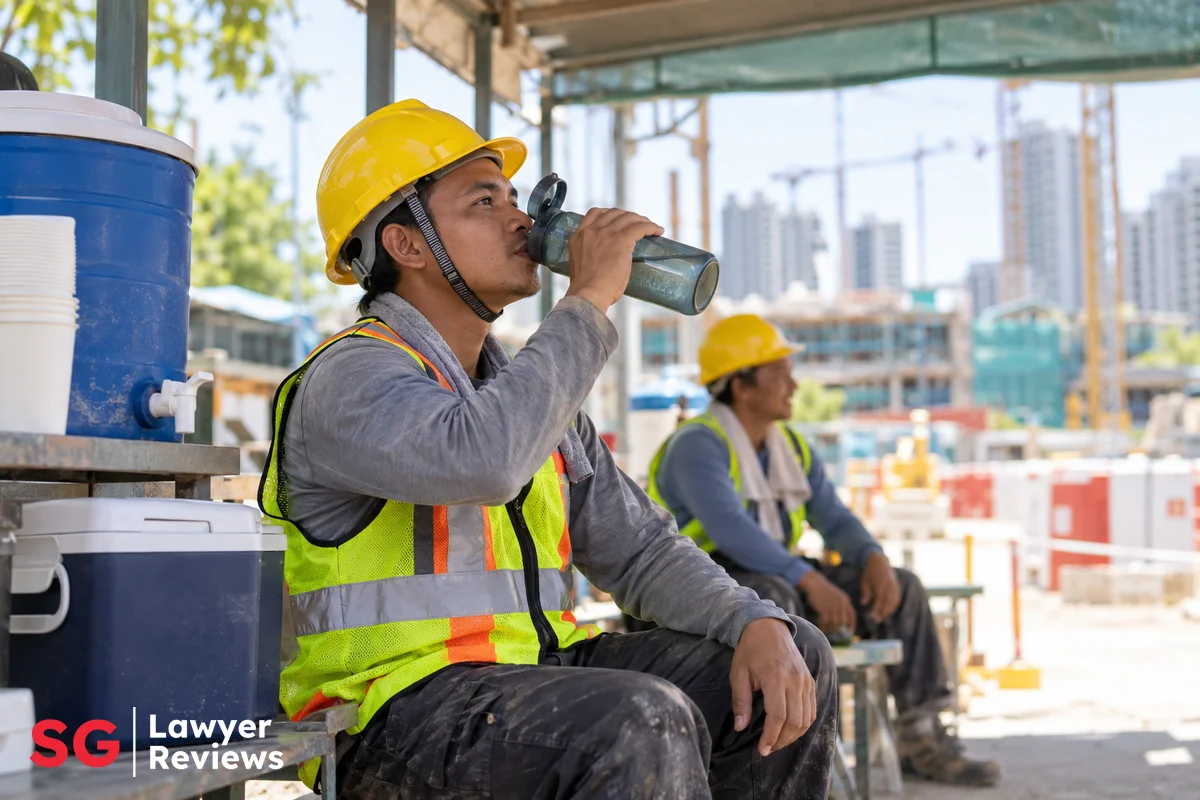
Heat stress is more than discomfort for a worker spending hours outdoors. It can impair judgment, worsen an existing condition and develop into a medical emergency. Singapore’s Ministry of Manpower announced in August 2026 that four previously recommended protections for outdoor workers will become mandatory on 1 December 2026. Employers have a transition period to put them in place. Workers and supervisors should know which measures change status and how they fit with the existing heat stress framework.
The announcement is specific. It concerns training, nearby cool drinking water, emergency cooling supplies and suitable clothing. It also recommends improved shaded rest areas, but describes that measure differently. Confusing a recommendation with a mandatory requirement can cause poor planning on both sides. This guide explains the new duties and the everyday steps that make them effective.
What MOM announced and when it takes effect
In its 28 August 2026 release, MOM said the enhanced Heat Stress Management Framework takes effect on 1 December 2026. Four practices that had been recommended under the outdoor work framework will become mandatory: a heat stress training programme for exposed workers; a cool drinking water supply near work areas; cold water, ice packs or water spray on standby for emergency response; and suitable clothing to mitigate excessive heat stress.
MOM separately introduced a recommendation for shaded rest areas that are well ventilated and well insulated or cooled. Employers should examine that recommendation seriously because a rest area that traps heat may not provide meaningful recovery. Nevertheless, it should not be described as one of the four newly mandatory measures in the announcement. The new duties complement existing expectations involving Wet Bulb Globe Temperature monitoring, regular hydration, breaks in shade, acclimatisation and emergency planning.
Training must reach the person doing the work
A training programme is useful only if workers can recognise symptoms and act without hesitation. Explain how heat affects concentration, when to report dizziness or weakness, whom to call and how a colleague should respond. Include supervisors who decide the pace of work and subcontractors who may not attend a main contractor’s usual briefings. A signature on a generic attendance sheet does not prove that a worker understood instructions given in an unfamiliar language.
Employers can record the topics, trainer, date and worker attendance, then test understanding with a short scenario. If a new crew joins during a hot period, give them training before exposure rather than waiting for the next scheduled session. Revisit the plan after an incident or change in work location. The MOM heat stress topic page is a practical place to check current guidance and tools.
Water must be accessible, not merely available somewhere
The new requirement specifies cool drinking water near work areas. That is an operational issue on mobile worksites, roofs, roadworks and large construction compounds. If a worker needs a long trip through a secure zone to obtain water, the supply is not serving its purpose well. Identify refill points at the start of each shift, check quantity against crew size and inspect whether containers stay clean and cool as the day progresses.
Supervisors should make hydration an expected part of the task, not a reward for finishing it. A worker may avoid drinking if breaks are discouraged or toilets are inaccessible. Encourage early reporting of symptoms and make sure relief staff can take over a task safely. The supply requirement works best when the schedule includes regular breaks and a realistic pace. If the job involves a contractor and an occupier, agree who replenishes and monitors water before work begins.
Emergency cooling supplies need an emergency plan
Cold water, ice packs or water spray must be on standby under the new requirements. Decide where the supplies will be kept, who checks them, and how quickly they can reach a worker who has collapsed or become confused. An ice pack locked in an office across the site is unlikely to help promptly. Workers should know how to call for medical assistance and where an ambulance can enter. Rehearse the route rather than relying on a laminated flowchart.
Do not delay emergency care while trying to decide whether the condition is “really” heat illness. Follow current first aid and medical advice, move the worker from heat where safe, and call appropriate emergency services for serious symptoms. Record what happened, the conditions and the response. Our guide on workplace injuries and accidents explains the documentation questions that can follow an event, but immediate care comes first.
Choose clothing for the hazard and the task
MOM also requires suitable clothing that can mitigate or protect workers from excessive heat stress. That does not mean removing required protective equipment simply because it feels warm. Reflective wear, helmets, gloves or other equipment may be essential for traffic, falling objects or chemicals. The challenge is to choose appropriate materials and fit while keeping the necessary protection. Consider breathable designs where suitable, shade from headgear compatible with helmets and spare dry garments where work leaves clothing soaked.
Review the clothing requirement by role rather than issuing one answer for every worker. A delivery rider, road crew member and worker in an enclosed but hot outdoor area experience different exposures and wear different protection. Consult employees about what is practical and check product claims. If a proposed cooling garment interferes with visibility or safe movement, a different measure may be needed. Document the assessment so purchasing decisions can be revisited.
Make the framework part of site decisions
Wet Bulb Globe Temperature monitoring is not a box to tick once in the morning. Conditions change through the day and differ under direct sun, near hot equipment or inside a poorly ventilated area. The announced measures complement existing monitoring, breaks, acclimatisation and emergency response. A site can have plentiful water but still create risk if strenuous work is scheduled at the hottest time without adequate recovery. Supervisors should be empowered to change a task when the assessment says conditions are unsafe.
Use a daily briefing to cover expected heat, new starters, high-exertion jobs, rest location and emergency contacts. Keep records of monitoring and the actions taken when readings or worker symptoms call for a change. The Workplace Safety and Health Council offers additional resources for safe work planning. For questions after harm occurs, our personal injury legal costs guide helps frame a consultation.
What workers and employers can do now
Employers should assign an owner for each of the four new duties, map exposed jobs, budget for water and cooling supplies, update training and inspect clothing. Subcontract agreements should state which party supplies shared facilities without creating ambiguity over safety responsibilities. Workers should attend the training, know the water and shade locations and report symptoms early. A worker who raises a genuine safety concern should give concrete details: place, time, task, temperature conditions and missing measure.
The December start date provides preparation time, not a reason to ignore current heat risks. If an incident occurs before then, existing workplace safety obligations and the facts still matter. Our guide to handling workplace complaints addresses a different issue, but its emphasis on recording concerns and responding promptly is useful across workplace processes. Check the latest MOM framework before finalising site rules.
Where an employee reports recurring headaches or near misses during an outdoor shift, the supervisor should revisit the risk assessment rather than merely reminding the worker to drink. Review workload, time under direct sun, acclimatisation and the length and quality of breaks. A worker returning from leave may need a different pace from someone already accustomed to the conditions. Keep medical details confidential while sharing the practical work restrictions that the team needs to follow. These actions turn a general framework into an observable response to a specific risk.
Frequently Asked Questions
Are shaded, cooled rest areas one of the four new mandatory items?
No. The August announcement describes improved shaded rest areas as a new recommended practice, while listing four other measures that become mandatory.
Do the enhanced measures apply before December 2026?
The four new mandatory requirements take effect on 1 December 2026. Existing safety and heat management duties should still be followed in the meantime.
Is water alone enough to comply?
No. The announcement also requires training, emergency cooling supplies and suitable clothing, alongside the existing heat stress management framework.
Thank you for sharing this article...
About the Author: Randy Alta