
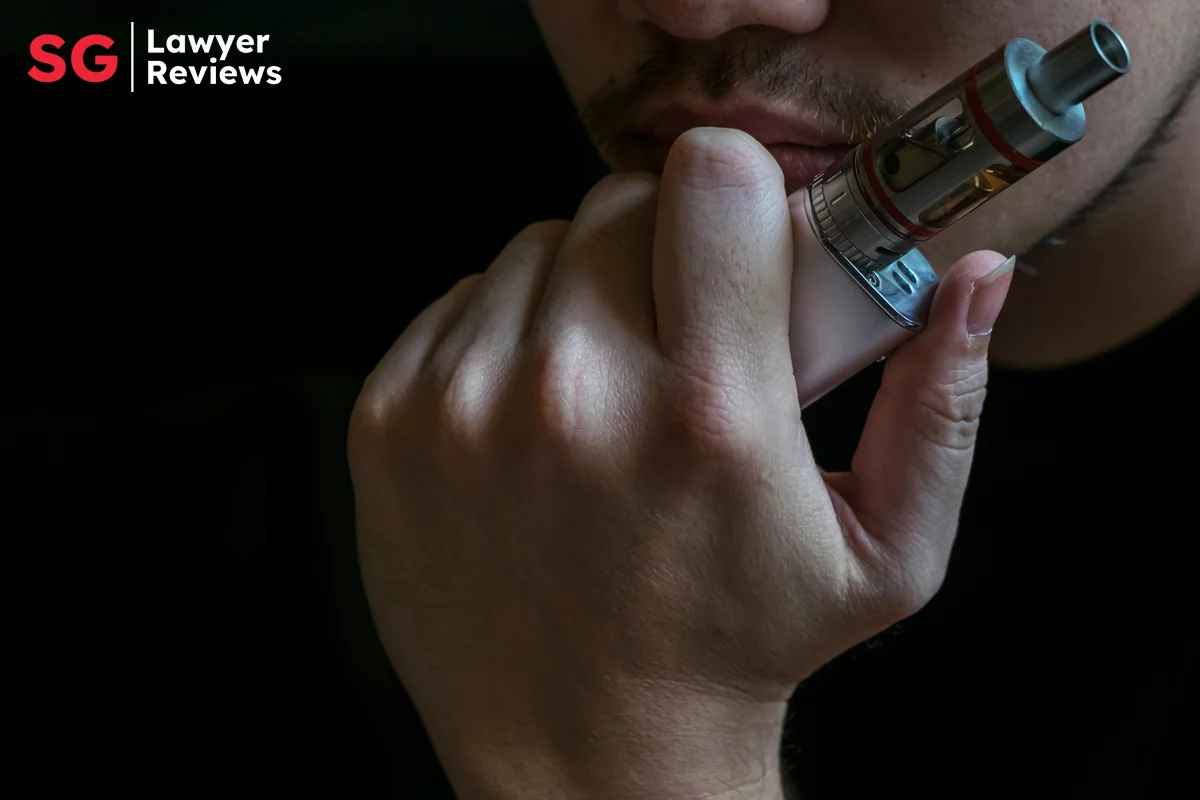
If you have followed the news in Singapore over the past year, you have probably heard the term Kpod. It refers to vape pods laced with etomidate, a powerful anaesthetic that was never meant to be inhaled for recreation. What started as a niche and dangerous trend among some young vape users has become a major focus of Singapore’s drug and health laws, with the legal treatment of etomidate changing twice within a year. Here is how the law got here, and what it means today.
What Etomidate Actually Is
Etomidate is a fast acting anaesthetic agent that doctors use to sedate patients, usually right before a medical procedure. It is not a recreational drug by design, and it was never sold to the public. Somewhere along the way, illegal vape suppliers began lacing vape liquid with it, producing pods that give users an intense but dangerous high. Because etomidate was designed for controlled use in a clinical setting under medical supervision, using it outside that setting carries real risks, including seizures, loss of consciousness, and in some cases death.
Singapore authorities became increasingly alarmed as Kpods spread among younger users through informal networks and social media. In one widely reported case, the State Courts sentenced a man to 16 months in prison in August 2025 for producing vape pods laced with etomidate, with the court specifically highlighting the need for strong deterrence given how dangerous the substance is.
How the Law Has Classified Etomidate
Before September 2025, etomidate sat under the Poisons Act 1938, treated as a controlled medicinal ingredient rather than a drug of abuse. That classification came with a maximum penalty of two years in jail and a 10,000 dollar fine for unauthorised possession, use, or trafficking, which authorities eventually decided was not tough enough given how the drug was being misused.
From 1 September 2025, the government moved fast. Etomidate was reclassified as a Class C controlled drug under the Misuse of Drugs Act on a temporary basis, which immediately unlocked much stiffer penalties and gave the Central Narcotics Bureau a clearer mandate to go after Kpod suppliers and users. This temporary listing was originally due to expire on 28 February 2026, and Parliament used the months in between to draft a more permanent solution.
That permanent framework is the Tobacco and Vaporisers Control Act. HSA confirms that etomidate and its analogues are listed as Specified Psychoactive Substances under the Act, with substantial penalties for importers and suppliers. The applicable legal framework matters because these provisions are distinct from the Misuse of Drugs Act offences that apply to controlled drugs.
What Happens If You’re Caught
The consequences for etomidate vape offenders now combine punishment with mandatory treatment, reflecting a view that many users are also struggling with dependency. If you are caught for the first or second time with an etomidate vape, you will be required to attend community based rehabilitation for three to six months, run jointly by the Institute of Mental Health and various Social Service Agencies. The programme includes both individual and group counselling, tailored to how serious your case is judged to be.
For those under 21, the approach is different again. Instead of the adult rehabilitation track, younger offenders go through the Ministry of Social and Family Development’s Youth Enhanced Supervision scheme, which is designed around their stage of development and specific risk factors rather than treating them exactly like adult offenders.
If someone is caught for a third time or more, the response escalates significantly. Third time and repeat etomidate vape offenders are admitted to the Drug Rehabilitation Centre for institutional treatment, meaning they are held and treated in a residential setting rather than continuing community based sessions. This mirrors how Singapore treats repeat offenders for other controlled substances, underlining that etomidate is now being taken as seriously as other drugs of abuse, even though it is technically classified separately under the TVCA rather than the Misuse of Drugs Act.
Why the Switch From the Misuse of Drugs Act to the TVCA
It might seem strange that a substance linked to seizures and deaths is being moved out of drug law rather than kept there permanently. The real reason is practical rather than a softening of the approach. Etomidate almost always turns up in vapes, not as a standalone street drug, so folding its regulation into the same law that governs vaping as a whole lets enforcement agencies deal with the whole problem, the device and the substance inside it, under one consistent framework. It also means that penalties for etomidate vapes can be aligned with the broader crackdown on vaping generally, including the steep new fines for vape sellers and importers under the TVCA.
Officials have been clear that this is not a loosening of the rules. The temporary listing under the Misuse of Drugs Act was always meant to be a stopgap while a dedicated law was drafted, and the TVCA is that dedicated law.
What This Means for Parents and Schools
Because Kpods have spread mainly through peer networks and social media rather than through licensed shops, a lot of the concern in Singapore has centred on young people and how families and schools should respond. The law now gives that concern a much sharper edge, since a teenager caught with an etomidate vape is not simply facing a telling off from a teacher, but a formal process involving either the Youth Enhanced Supervision scheme or, for repeat cases, the Drug Rehabilitation Centre.
This has pushed schools and community groups to treat vaping education as closer to drug education than to a lifestyle or health choice conversation. Parents are often the first line of awareness, since Kpods do not look obviously different from ordinary vapes, and a young person struggling with dependency may not volunteer the information on their own. The involvement of the Ministry of Social and Family Development in the rehabilitation pathway for under 21s reflects a policy choice to treat young offenders as needing support and supervision rather than simply punishment, though the legal consequences of being caught remain real.
For families who are worried but have not yet encountered the enforcement system, there is value in engaging early with school counsellors, family service centres, or healthcare providers, rather than waiting until a young person is caught by the police or the Health Sciences Authority.
Frequently Asked Questions
Is etomidate still legal for hospitals and clinics to use?
Yes. Etomidate remains an approved medicine for legitimate medical use, such as sedating a patient before a procedure. The law targets its use outside authorised medical settings, particularly when it is added to vapes, not its role in healthcare, and hospitals continue to use it under normal clinical controls.
How can someone tell if a vape pod contains etomidate just by looking at it?
There is no reliable way to visually identify an etomidate laced pod from the outside. This is part of why the substance is so dangerous, since users often cannot be sure what they are actually inhaling, sellers rarely disclose it honestly, and the effects can be far stronger and more unpredictable than a typical nicotine vape.
Does going through rehabilitation mean an offender avoids having a criminal record?
Rehabilitation is a mandatory part of the penalty structure rather than a replacement for legal consequences. Offenders can still face fines or other penalties alongside the rehabilitation requirement, and whether a record results depends on how the case is charged and dealt with, so rehabilitation should not be assumed to wipe the slate clean.
Can a parent or family member seek help for a young person before they are caught by the authorities?
Yes. Voluntary treatment options exist outside the enforcement system, and families concerned about a young person’s vaping or suspected drug use can approach healthcare providers, school counsellors, or social service agencies for support without needing to wait for an arrest or an official case to be opened.
What should someone do if they suspect a vape they were given or bought might contain etomidate?
The safest step is to stop using it immediately and dispose of it through one of the Health Sciences Authority’s designated disposal points, which accept vapes without requiring the person handing it in to identify themselves or explain how they obtained the device.
Thank you for sharing this article...
About the Author: Randy Alta