
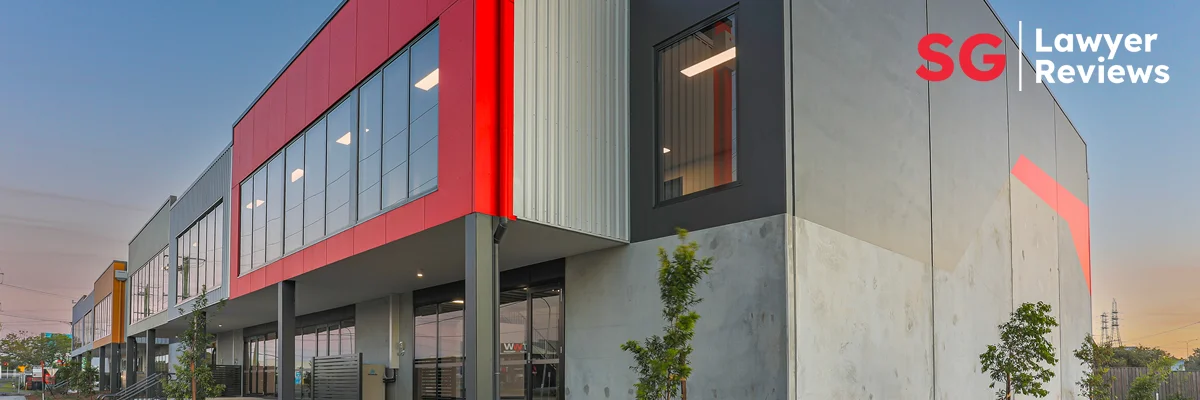
What property or construction issues does commercial property cover in Singapore?
Commercial property covers the acquisition, ownership, leasing and disposal of property used for business purposes, such as office buildings, retail units and shopping mall lots, along with the legal issues that arise throughout the ownership lifecycle, including zoning and permitted use, financing, leasing to tenants, and eventual sale.
It covers due diligence issues specific to commercial property, such as confirming the property’s approved use under the Urban Redevelopment Authority’s records, checking existing tenancies and their terms where the property is bought with sitting tenants, and understanding any strata or building management arrangements that apply where the property forms part of a larger development.
The area also covers commercial-specific tax and financing considerations, including Goods and Services Tax treatment, which can apply differently to commercial property compared with residential property, and financing structures commonly used for commercial acquisitions, which may differ from typical residential mortgage arrangements.
Because commercial property transactions often involve larger sums, more complex use restrictions, and considerations such as existing tenancies that residential transactions do not typically involve, anyone buying, selling or leasing commercial property in Singapore should seek advice from a lawyer experienced in commercial property matters to properly address these additional layers of complexity.
Which owners, buyers, sellers, landlords, tenants or project parties may be affected?
Owners and prospective buyers of commercial property are directly affected by the legal framework governing acquisition, financing and ownership, while sellers need to ensure their disposal complies with applicable requirements and that any existing tenancies or encumbrances are properly addressed as part of the sale.
Where the commercial property is leased out, landlords and tenants are both affected by the terms of their lease and the broader regulatory framework, including any restrictions on permitted use that could affect what a tenant is allowed to operate from the premises. A change in ownership of a commercial property does not automatically terminate existing leases, so a buyer typically takes the property subject to existing tenancies, making due diligence on those tenancies particularly important.
Where the property is part of a strata development, the management corporation and other owners within the development have an interest in how individual units are used, particularly where use restrictions or house rules apply across the development as a whole.
Because commercial property transactions can affect a range of parties beyond just the immediate buyer and seller, including existing tenants and, where relevant, other owners within a strata development, all parties involved should seek advice from a lawyer to understand how the transaction affects their specific position and any ongoing obligations they may inherit or retain.
Which HDB, SLA, URA, BCA or court requirements may apply?
The Urban Redevelopment Authority’s Master Plan and planning permission framework governs the permitted use of commercial property, and buyers should confirm that their intended use aligns with the property’s approved use, since operating outside the approved use without proper permission can expose the owner or tenant to enforcement action.
The Singapore Land Authority maintains the land title register relevant to establishing ownership and encumbrances, and its records are checked as part of standard conveyancing due diligence for any commercial property transaction, similar to residential property.
The Building and Construction Authority is relevant where building works, additions or alterations are contemplated, since such works generally require proper building plan approval, and BCA’s records and requirements around structural and fire safety compliance are relevant to due diligence, particularly for older commercial buildings.
HDB requirements are generally not directly relevant to commercial property in the way they are for HDB flats, though where a commercial unit forms part of a mixed development with an HDB component, some interaction with HDB’s framework could arise. Because commercial property can engage several regulatory frameworks depending on the specific building and intended use, buyers should have their lawyer confirm which requirements actually apply to their specific transaction and property type. You may also find Best Conveyancing Law Firms in Singapore useful when considering your next steps.
What title documents, contracts, plans or payment records should be reviewed?
Title documents for commercial property, including the title search results and any registered encumbrances such as mortgages or caveats, should be reviewed in the same way as for any property purchase, alongside the property’s approved use records to confirm what activities are permitted on the premises.
Where the commercial property is sold with existing tenancies, the relevant tenancy agreements should be carefully reviewed to understand the rental income, lease terms, renewal options and any obligations the buyer would inherit as the new landlord, since these terms directly affect the property’s value and the buyer’s future flexibility.
Where the property is part of a strata development, the management corporation’s by-laws, house rules, and records of maintenance fund contributions and any outstanding levies should be reviewed, since these affect both the cost of ownership and any restrictions on how the unit can be used or altered.
Floor plans and any building approval records are also relevant, particularly where the buyer intends to carry out renovation or fit-out works, to confirm what changes have already been approved and what further approval might be needed. Because reviewing these documents requires both legal and, in some cases, technical expertise, buyers should engage a lawyer, and where appropriate a building surveyor, to review the relevant documents before committing to a purchase. For broader context, see Should You Reply to a Lawyer’s Letter From Your Landlord or Tenant?.
What approvals, notices, duties or filing deadlines may apply?
Where a buyer intends to change the use of a commercial property from its currently approved use, written permission from the Urban Redevelopment Authority is generally required before the change can lawfully take effect, and operating a different use without this approval can expose the owner to enforcement action, including a requirement to cease the unauthorised use.
Stamp duty is payable on the purchase of commercial property, generally calculated on a tiered basis similar to other property types, and buyers should confirm the applicable rates and filing deadlines with their lawyer to ensure timely payment and avoid penalties for late filing.
Where the property is part of a strata development, notices relating to management corporation matters, such as annual general meetings or special levies for major repairs, may be relevant to a new owner, and buyers should check whether any such matters are pending at the time of purchase.
Because missing an approval requirement or a filing deadline can result in penalties or complications with the intended use of the property, buyers and their lawyers should confirm the full list of applicable approvals, notices and deadlines specific to the property and the buyer’s intended use as part of the due diligence process, well before completion.
What financing, CPF, tax or stamp duty issues should be considered?
Financing for commercial property acquisitions is typically structured differently from residential mortgages, often involving different loan-to-value ratios and terms, and buyers should discuss financing options with their bank early in the process, since commercial property lending criteria can differ meaningfully from residential lending.
CPF savings generally cannot be used to finance the purchase of commercial property in the same way they can for residential property, since CPF housing rules are specifically designed around residential housing needs rather than commercial investment, so buyers should plan to fund commercial purchases through cash and bank financing rather than assuming CPF will be available.
Goods and Services Tax can apply to the sale of commercial property where the seller is GST-registered, which is a consideration that does not typically arise for residential property sales, and buyers should clarify the GST treatment of a specific transaction with their lawyer and accountant before finalising the purchase price and payment structure.
Stamp duty applies to commercial property purchases on a tiered basis, and buyers should obtain a clear calculation of their expected stamp duty liability, alongside understanding the GST position, so that the full cost of the transaction, beyond just the headline purchase price, is properly understood before committing to the purchase.
What happens if a party defaults or a defect is discovered?
If a buyer or seller defaults on their obligations under a commercial property sale contract, such as by failing to complete on the agreed date without a valid reason, the non-defaulting party may be entitled to remedies including forfeiture of deposit, a claim for damages, or in some cases an order for specific performance requiring the defaulting party to complete the transaction, depending on the terms of the contract and the circumstances of the default.
Where a defect in the property is discovered, such as a structural issue or unauthorised alteration, after the sale contract has been entered into but before completion, the buyer’s options depend on the specific contract terms, including whether the contract allows for the buyer to raise requisitions or objections based on the defect, and whether the seller is required to remedy it or compensate the buyer.
Where a defect is discovered after completion, the buyer’s options are generally more limited and depend on whether any warranties were given by the seller as part of the sale, since commercial property is often sold on an as is basis without extensive condition warranties, unlike some other types of transactions.
Because the consequences of default or a late-discovered defect can be significant, and because the available remedies depend heavily on the specific contract terms, parties should ensure their sale contract clearly addresses these scenarios, and should seek legal advice promptly if either issue arises during a transaction.
Can the matter be resolved through negotiation, adjudication, mediation or arbitration?
Many commercial property disputes, particularly those involving disagreements over contract interpretation or minor defects, can be resolved through direct negotiation between the parties, often with their respective lawyers facilitating a practical resolution without the need for formal proceedings.
Where the dispute involves a payment claim connected with construction or renovation work carried out on the commercial property, adjudication under Singapore’s security of payment legislation may be available as a fast, interim mechanism for resolving the payment dispute, separate from any broader dispute over the property transaction itself.
Mediation is often a useful option for commercial property disputes more broadly, particularly where an ongoing landlord-tenant or co-owner relationship makes preserving some level of working relationship valuable, and mediation can often reach a resolution more quickly and at lower cost than litigation.
Where a dispute cannot be resolved through negotiation or mediation, it may proceed to arbitration, if the underlying contract includes an arbitration clause, or to the Singapore courts, and the appropriate forum depends on what the contract specifies and the nature of the dispute. Because the available dispute resolution options depend on the specific type of dispute and the terms of the relevant contract, parties should seek legal advice to identify the most suitable and cost-effective route. For a practical explanation of this related issue, read Landlord and Tenant Disputes in Singapore: Your Rights and Options.
What legal, expert and transaction costs may arise?
Commercial property transactions typically involve legal fees for the conveyancing work itself, which can be more substantial than for residential transactions given the additional due diligence often required, such as reviewing existing tenancies, strata management arrangements, or specific use restrictions relevant to the property.
Stamp duty is a significant cost component, calculated on a tiered basis according to the purchase price, and where Goods and Services Tax applies to the transaction, this adds a further cost that buyers need to factor into their overall budget alongside the purchase price itself.
Where the buyer engages a valuer to assess the property’s value, particularly for financing purposes, or a building surveyor to assess the physical condition of the property, these expert fees add to the overall transaction cost, and are generally a worthwhile investment given the sums typically involved in commercial property purchases.
Where a dispute arises, whether over the transaction itself or a subsequent tenancy or management corporation matter, additional legal and, where relevant, expert costs can arise, and these vary considerably depending on the complexity and forum in which the dispute is resolved. Because the total cost of a commercial property transaction extends well beyond the purchase price, buyers should obtain a clear breakdown of expected costs from their lawyer early in the process.